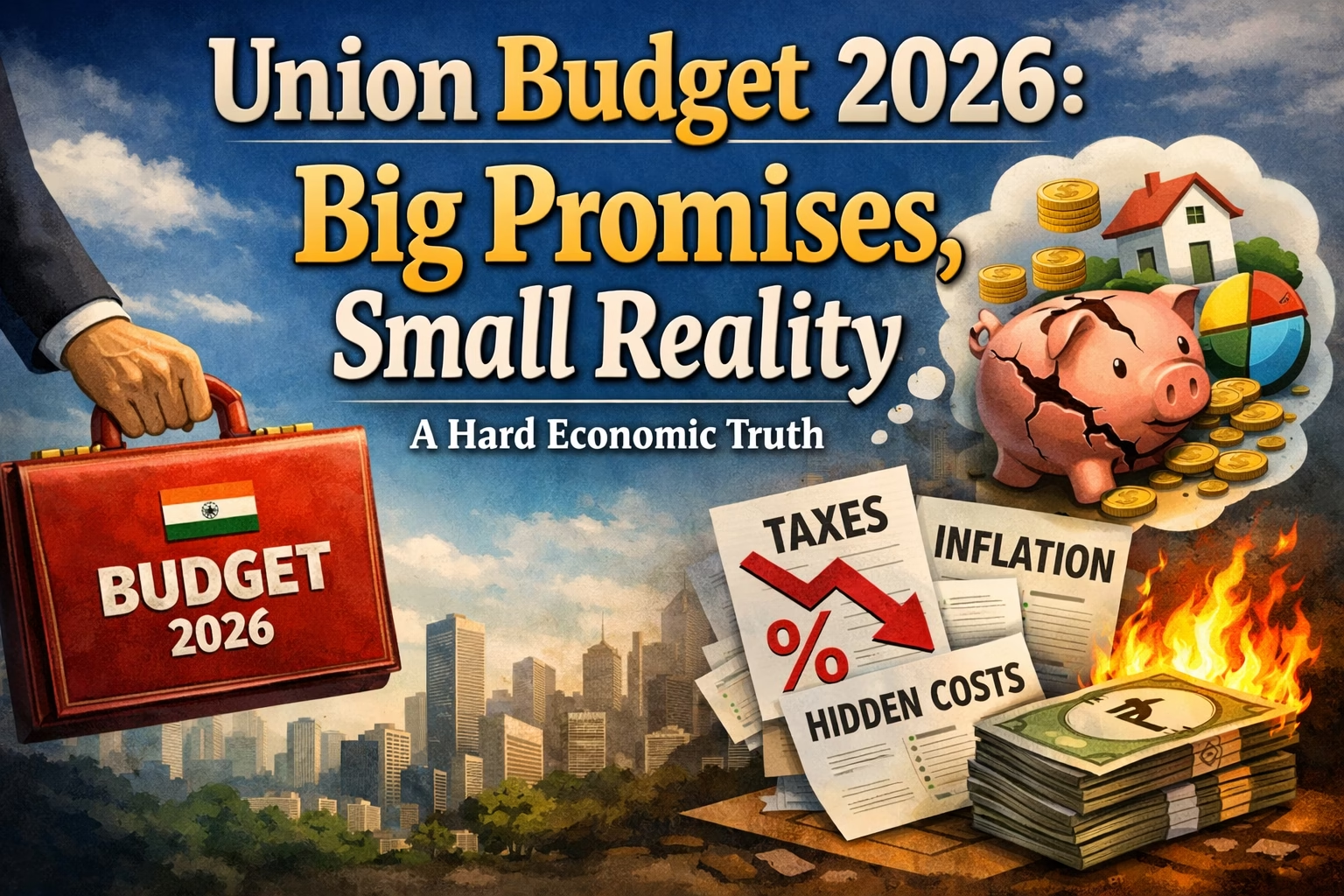
Union Budget 2026: Big Promises, Small Reality — A Hard Economic Truth
The Union Budget 2026 has been marketed as a “middle-class friendly” and “growth-oriented” budget. However, a deeper economic analysis reveals that much of the relief is psychological rather than financial. Behind attractive announcements lies a complex web of taxes, inflation, and hidden costs that significantly dilute the real benefits.
—
1) The Illusion of Tax Relief: Middle Class as the Silent Financier
The government claims to have provided tax relief to the middle class. But the reality is different.
Direct tax benefits are limited and conditional.
Any meaningful wealth creation through investments attracts capital gains tax.
Long-term financial planning is increasingly taxed at multiple levels.
Economic Insight:
If an individual saves more and invests wisely, the government taxes the returns.
If they spend more, they pay indirect taxes like GST.
👉 Conclusion:
The middle class is trapped in a system where saving is taxed and spending is also taxed.
This makes the so-called tax relief nothing more than a fiscal illusion.
—
2) Capital Gains Tax: The Hidden Weapon Against Wealth Creation
The budget indirectly discourages long-term wealth creation:
Property investments attract capital gains tax.
Equity and mutual funds are taxed at different rates.
Indexation benefits are reduced or complicated.
Frequent policy changes create uncertainty.
Economic Insight:
True wealth creation requires long-term stable policies.
But frequent changes in capital gains rules make financial planning unpredictable.
👉 Reality:
The budget gives a “lollipop” of savings but bites back through capital gains taxation.
—
3) Inflation vs Income Growth: The Real Middle-Class Crisis
While the budget highlights GDP growth, it ignores the real issue:
Inflation is rising faster than salaries.
Fuel, food, education, healthcare, and housing costs continue to increase.
Tax benefits do not compensate for rising living expenses.
Economic Insight:
If income grows by 6% but inflation rises by 8–10%, the citizen becomes poorer despite “growth”.
👉 Reality:
The middle class is economically squeezed from both ends — taxes and inflation.
—
4) Infrastructure Spending: Numbers Without Immediate Impact
The budget allocates massive funds for infrastructure projects:
Highways, railways, smart cities, and mega corridors.
But benefits reach corporates and contractors faster than citizens.
Common people see delayed or indirect benefits.
Economic Insight:
Infrastructure spending boosts GDP statistics, but not immediate household income.
👉 Reality:
Big projects create big headlines, not instant relief for common people.
—
5) Corporate-Friendly, Citizen-Neutral Budget
Despite claims of inclusiveness:
Large corporations receive incentives, subsidies, and policy support.
MSMEs and small businesses face compliance burdens.
Tax complexity discourages entrepreneurship.
Economic Insight:
When policy favors corporates, wealth concentrates at the top.
👉 Reality:
The budget strengthens corporate balance sheets more than household budgets.
—
6) Fiscal Discipline vs Social Reality
The government emphasizes fiscal deficit control:
Welfare spending grows slowly.
Social security and healthcare support remain limited.
Public debt is indirectly transferred to citizens through taxes.
Economic Insight:
Fiscal discipline is important, but excessive reliance on taxpayers weakens consumption.
👉 Reality:
The government balances its books, but citizens struggle to balance theirs.
—
7) The “Lollipop Budget” Theory — A Harsh Truth
The Union Budget 2026 can be described as a “Lollipop Budget”:
Attractive announcements create hope.
Real benefits are limited by taxes and inflation.
Citizens cannot reject the system, nor fully enjoy it.
👉 In simple words:
You are encouraged to save, but taxed when you save.
You are encouraged to invest, but taxed when you profit.
You are encouraged to spend, but taxed when you consume.
This is not economic empowerment — it is controlled financial freedom.
—
Final Verdict: Growth for Numbers, Not for People
The Union Budget 2026 appears strong in statistics but weak in real-life impact.
It prioritizes macroeconomic indicators over microeconomic realities.
Until policies focus on genuine disposable income growth, stable tax rules, and inflation control, the middle class will continue to feel that the budget is not a blessing, but a cleverly packaged burden.